INGENIUS Curates Brandweek 2025 Panel with Reebok and the Atlanta Dream
INGENIUS was invited to curate a panel at Brandweek 2025 on the future of brand partnerships. Here's what brought Reebok, the Atlanta Dream, and one of its athletes to the same table — and why "athlete-led" is no longer a tactic but a business model.

LaTecia Johnson

The Operator's Seat
When Brandweek invited INGENIUS to curate a panel on the changing landscape of culture and capital, I didn't want another conversation about "the power of influencers." I wanted the three seats where the real decisions actually get made in the same room: a brand, a team, and an athlete.
So we built The Convergence of Athlete-Led Partnerships and Brand Relevance — and put Connor Thompson of Reebok, and Shayne Odum and Naz Hillmon of the Atlanta Dream, on stage together. I moderated.
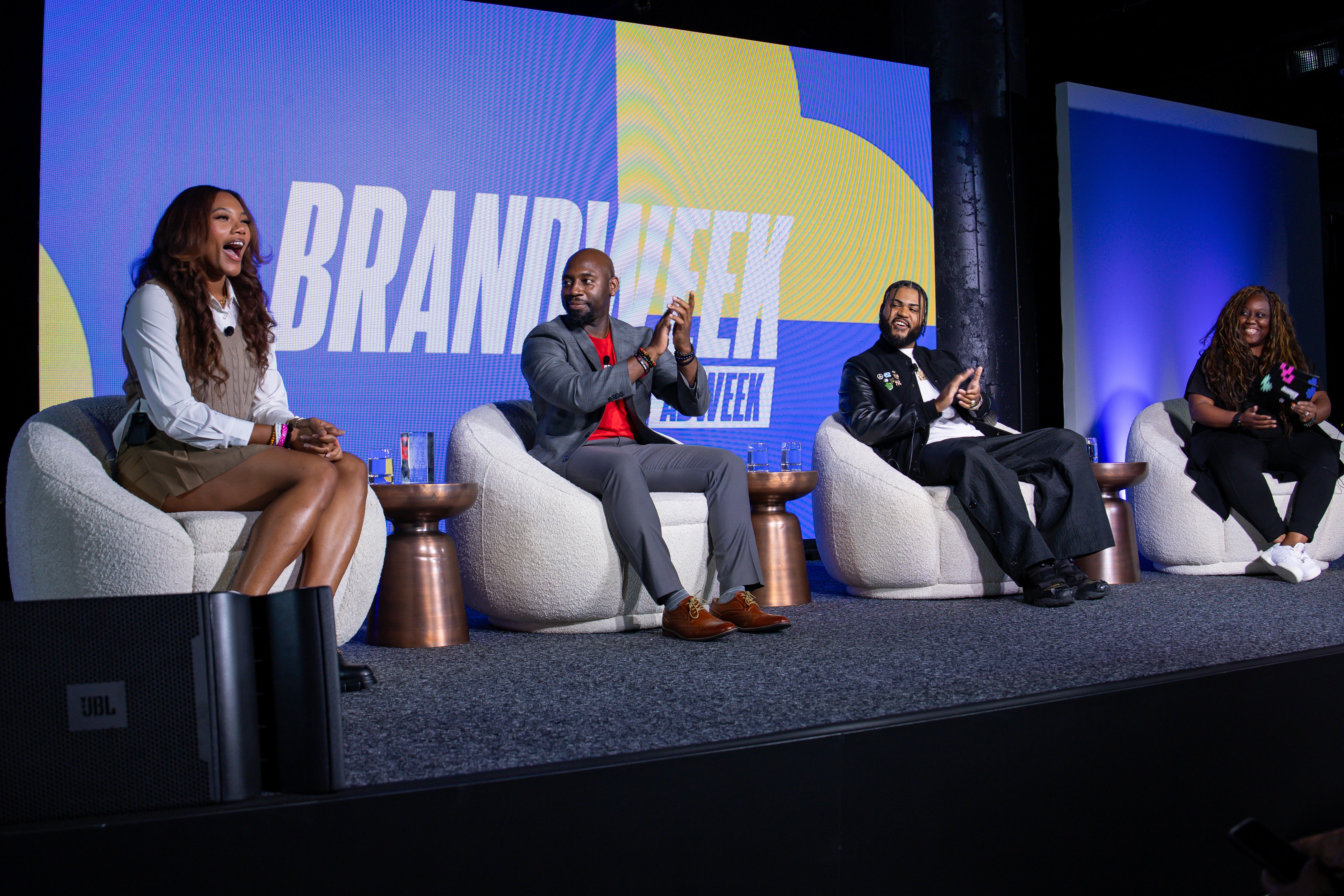
The more important work happened before anyone sat down: deciding what this panel was about, and who needed to be there to make it true.
I opened with the line I keep coming back to: the last decade was about influence. This one is about impact.
That's not wordplay. It's a shift in where the value sits.
The old model was a logo swap. A brand paid for visibility, the athlete lent their face, and everyone measured impressions. It was transactional by design — and audiences could feel it. The endorsement era treated culture as something you borrow: rent the relevance, run the campaign, move on.
What came through from all three seats is that the borrowing model is over.
Athletes aren't endorsing anymore. They're authoring. Naz spoke to authenticity from the athlete's point of view — what makes a partnership feel real versus performative. The tell is always the same. When a brand shows up at the concept stage, the partnership has a chance. When it shows up at the campaign stage asking for a face, the audience smells it immediately. Today's athletes are creators, founders, and media brands in their own right. They're not distribution. They're co-authors.
For brands, that means collaborations have to feel like joint ventures, not transactions. Connor's framing of Reebok's work made it concrete: the partnerships that move real outcomes — foot traffic, conversions, brand heat — are the ones where the athlete is embedded early, not bolted on late. Legacy brands stay relevant not by chasing cool, but by operationalizing it. You don't buy cultural capital. You build it, in partnership, over time.
And for teams, the job is alignment. Shayne described how the Atlanta Dream evaluates which brands actually deserve to stand next to their athletes. That's the part most people miss. The team isn't just a rights-holder selling sponsorships — it's a filter, protecting the trust between athlete and community. The Dream's work this year — including the partnership that erased millions in debt for Atlanta families — wasn't a stunt. It was proof that a team-brand-athlete partnership can be a community engine, not just a media buy.
That's the through-line, and it's the reason we built the panel the way we did: cultural capital is the new currency of influence — credibility, fluency, and belonging. And here's the part that matters for anyone holding a budget: culture is not the soft side of marketing. It's the engine of demand.
Which brings me to the question I asked last, and the one I'll leave you with.
We can all agree on authenticity and storytelling. The harder conversation is proof. What does success actually look like for the next generation of athlete-led partnerships? Because if cultural capital is real value, it has to be measurable — defensible in a boardroom, not just felt in a room.
That's the work INGENIUS is building toward. Attention is easy to buy. Context — knowing who to invest in, when to engage, and how to activate — is the thing that separates relevance from noise in the next era. Curating this panel was a version of that same discipline: the right people, in the right frame, at the right moment.
I asked each panelist to define relevance in 2026 in a single line. I'll give you mine here:
Relevance is what happens when influence becomes impact — and you can prove it.
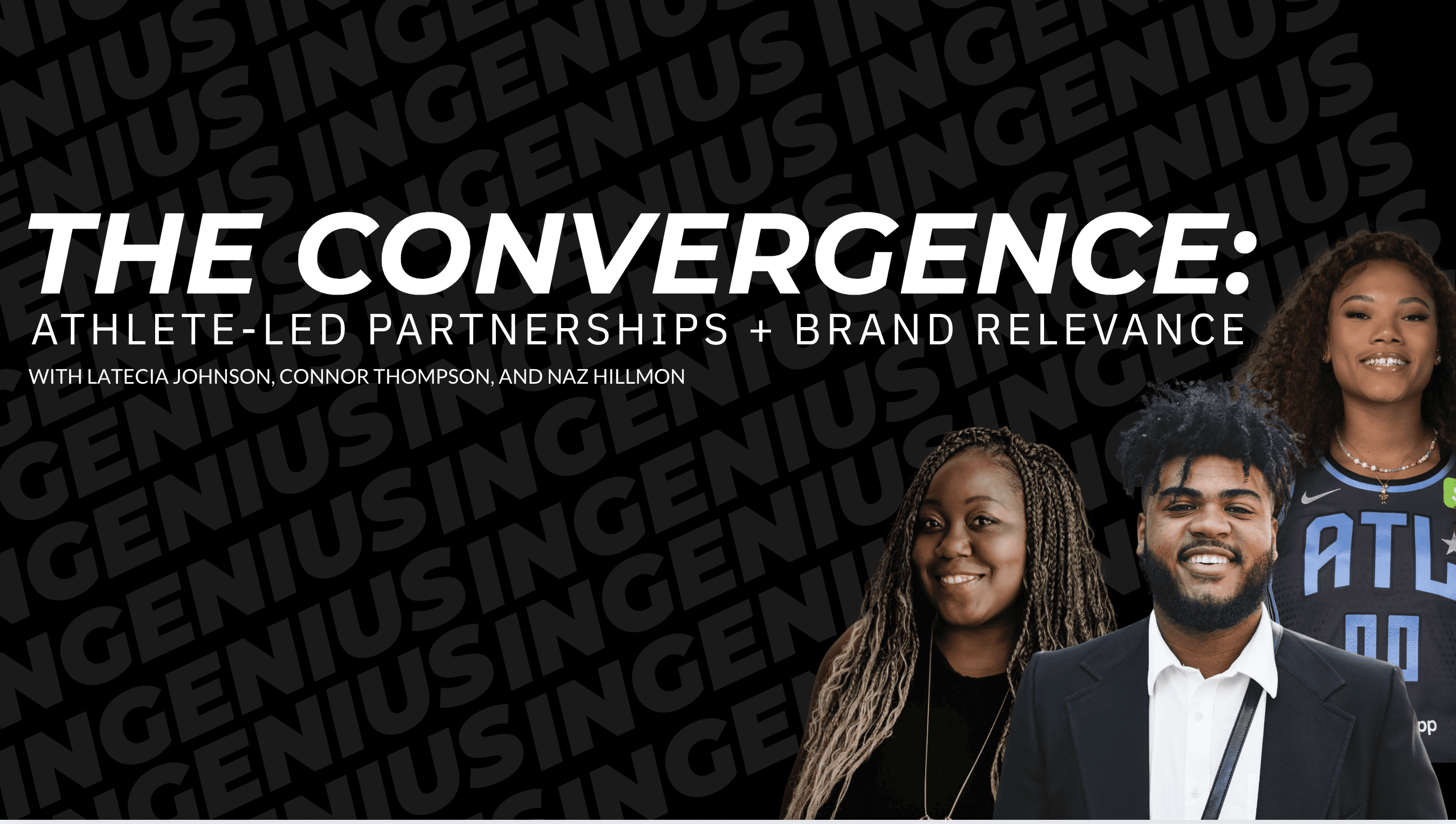
Watch the full conversation with Connor Thompson (Reebok), Shayne Odum and Naz Hillmon (Atlanta Dream) — a panel curated and moderated by INGENIUS, Founder & CEO LaTecia Johnson on Adweek by clicking here.
About
INGENIUS turns culture into a competitive advantage for the world\’s most ambitious brands.
Follow us:
Explore Topics

Signal vs Noise

The Frameworks

Receipts

The Operator's Seat

The Creator Economy

Entertainment
Related Posts

The Frameworks
LaTecia Johnson
·
The Three-Lane Launch Playbook
Your next launch strategy doesn't look like you think it should. A Signals playbook by INGENIUS

Field Notes

Olivia Bennett
·
How Klutch Sports and The Team Use Creator Marketing to Build Athlete Brand Equity
Field Notes

Shawn Filer
·