Bread, Circuses, and a City on Fire

Shawn Filer
Field Notes
New York spent this summer proving an old Roman trick still works. The Knicks lit the city on fire winning it all for the first time in over fifty years. The Liberty took the WNBA Commissioner's Cup. Gotham FC, the reigning women's soccer champions, hosted the largest crowd in the sport's history: 42,000 fans. The World Cup final landed ten miles from my apartment, close enough to watch every match outside on borrowed screens, but sadly I couldn’t sell a kidney fast enough for a seat. This wasn't a good summer despite everything else going on in the world. It was a good summer because of it. As the world gets worse, we run toward the game. Rome figured this out two thousand years ago. Keep people fed and entertained and they'll forgive you almost anything else.
The Romans called it panem et circenses, bread and circuses, a phrase written to describe a public that had traded political power for full stomachs and a good show. New York in 2026 isn't hungry the way ancient Rome was. It's exhausted differently: watching the elite’s wealth pile up faster than they can spend it, watching prices outrun paychecks, watching two wars in Ukraine and the Middle East get funded year after year. So the city built its circus. Forty two thousand people didn't show up to a women's soccer game because the tickets were cheap. They showed up because for 90 minutes they wanted to feel something.
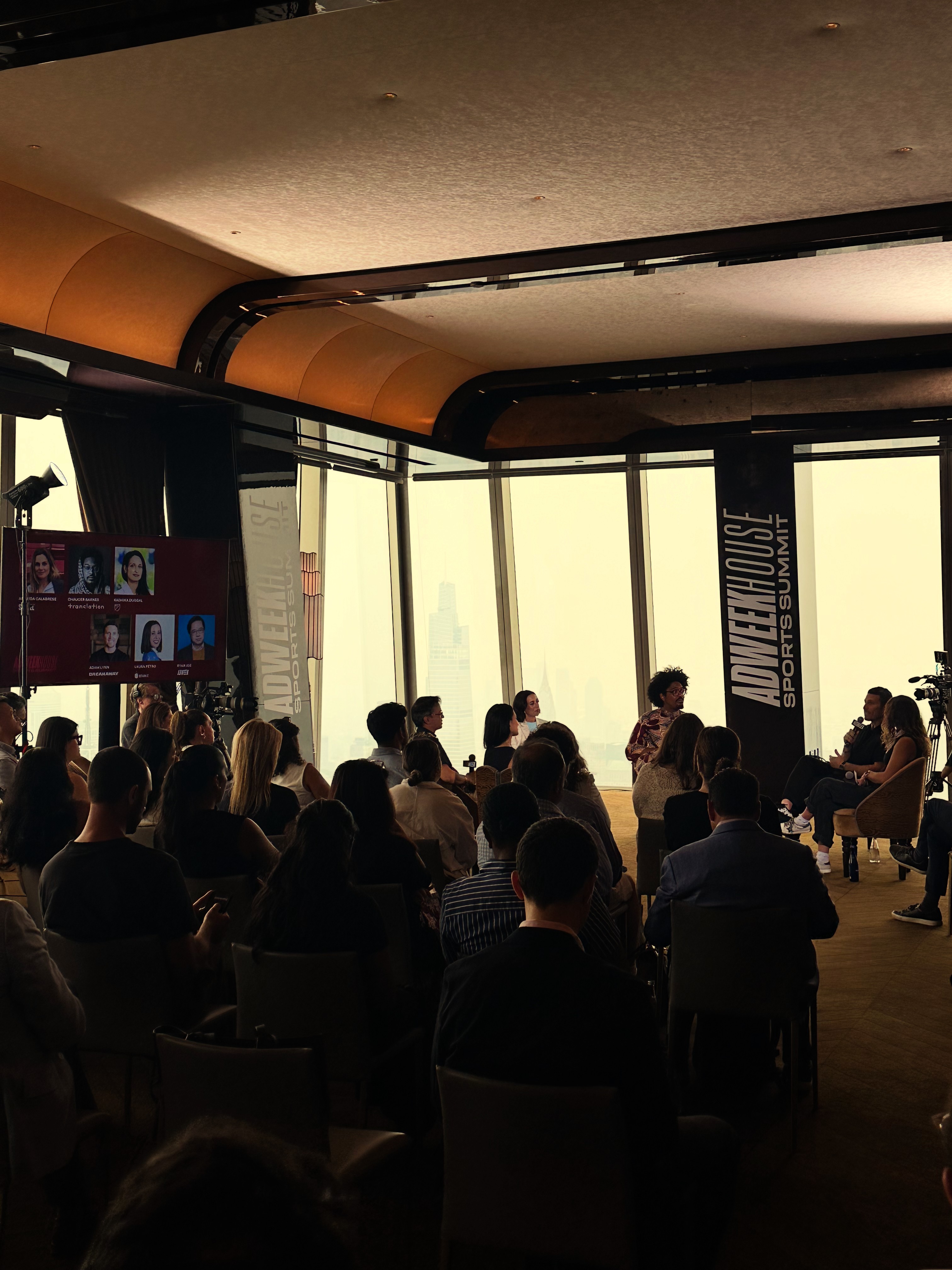
I understood why at the Adweek's Sports House at The Edge when I heard Alexis Ohanian talk about his firm, Seven Seven Six, and its bet on women's sports. His argument was blunt: as the world gets scarier, more people flock to live sport, and women's sports are still priced like nobody's watching. He wasn't wrong to notice, and he wasn't shy that he's richer for having noticed early. The same logic explains a goalkeeper from Cape Verde, a country that had never sniffed a World Cup before this one, going from fifty thousand followers to nineteen million over one group stage.
Then came the World Cup's first ever halftime show: performers from three continents in front of the American president and the Spanish king, closing on kids singing about love that gave me goosebumps. It really was moving. It was also the same summer Elon Musk crossed a trillion dollars in net worth and Congress kept funding two wars nobody's winning. The power to unite a stadium is the same power that can distract one.
Attention is the last commodity nobody's priced correctly yet, and every CPG and sports marketing exec at Hudson Yards that day was racing to fix it. How is this possible? Well it probably won’t be some Silicon Valley dropouts who have never been inside a stadium box and absolutely won’t be some Atlanta finessers who couldn’t spell indemnification if a gun was put to their head. It’ll have to be a team who can thread the needle between the athlete, the CFO and the developer. That’s us at INGENIUS: we've sat in the locker room, justified the budget, and shipped the code, sometimes in the same afternoon.
About
INGENIUS turns culture into a competitive advantage for the world\’s most ambitious brands.
Follow us:
Explore Topics

Signal vs Noise
The Frameworks
Receipts

The Operator's Seat

The Creator Economy

Entertainment
Related Posts
The Operator's Seat
Olivia Bennett
·
INGENIUS Expands Into Commerce With Acquisition of Arnio Platform
The Frameworks

LaTecia Johnson
·
The Three-Lane Launch Playbook
Your next launch strategy doesn't look like you think it should. A Signals playbook by INGENIUS
Field Notes
Olivia Bennett
·